
Lorain County Address Trail by Era
Previous residents research has several clocks. The current property record supplies the durable starting point, while recorded land instruments supply a much longer ownership trail. Lorain Public Library System, or LPLS, adds local household evidence through its Special Collection and microfilm. The resulting record set is not complete for every address or community, but it gives a practical way to test who lived here before without confusing a property owner with every person in a home.
| Source | Years It Covers | Where Held | What It Shows |
|---|---|---|---|
| Recorder land records | Begins 1824; no published online-only cutoff | Recorder PAX and counter | Recorded instruments, party roles, and legal descriptions |
| Auditor property search | Current system; historical tax-year selector visible | Lorain County Auditor portal | Current situs address and property number |
| Lorain city directories | Most Lorain volumes as far back as 1903 | LPLS Special Collection | Period name, address, and telephone clue |
| Lorain newspapers | 1901 forward in several local runs | LPLS microfilm | Move, family, death, and event context |
| Census and local vital films | Released census years; local films include nineteenth-century runs | LPLS | Household composition and time anchors |
| Historical Society library | Specific volume or run must be confirmed | LCHS by appointment | Offline directories and local-history fallback |
Use the property number first when the address still exists. For a historical name or an address that no longer matches a present street label, preserve the wording as printed and move to library, Recorder, or Historical Society help rather than forcing a modern match.
Note: An entry in a directory is useful dated evidence, but its absence does not prove that a household was absent from Lorain County.
Lorain County Parcel Starts the Past Trail
The Lorain County Auditor GIS & Tax Map is the current-address starting point. Its public landing page directs a search by parcel, owner, or address, and the detailed Location Search separates street number, directions, street, suffix, unit, and city, state, or ZIP components. Save the exact situs address, tax year, and property number. Those details make the transition from a present address to an older instrument much safer.
The property number is stronger than a street label when older material uses a subdivision lot, block, metes-and-bounds description, or a former street name. The Auditor’s owner-occupancy attribute is only a tax-status clue. It does not create a roster of the people living at a parcel, so it should not be used as a shortcut for previous residents.
The Auditor Location Search supplies the address-component route that anchors this work. Its visible controls include real-estate and manufactured-home categories, so retain the type selected along with the property number.
Lorain County Recorded Land Since 1824
Lorain County land and property records begin in 1824. That long history is valuable, but it does not mean every older document can be found through one public web query. The Recorder maintains physical archives and digital records, while its public instructions do not state a verified online beginning date. A no-result in the account-backed system is a reason to ask the Recorder about the counter and older access, not proof that the address has no earlier history.
The Recorder’s fees and documents page is useful when a researcher needs the custodian’s copy options or redaction forms. Its published schedule lists regular copies at $2 per page and certified copies at $2 per page plus a $1 seal. For prior residents work, order or inspect only the instrument needed to check a date, party role, legal description, or parcel reference.
Checking the Recorder’s own fee and document information keeps a copy request tied to the office that holds the recorded instrument.
For future property-fraud awareness, the Recorder’s free RecordALERT service monitors selected names for newly recorded documents. It is a notice tool, not a title opinion and not evidence that a filing is correct.
RecordALERT can prompt a check of a new record, while the actual Recorder instrument remains the source for the document facts.
Lorain County Deed Records Backward
The Recorder’s Property Search instructions direct users into DTS Public Access. Start with the current property number and current owner from the Auditor, then use the named party or parcel clues in the Recorder index. Open the selected instrument and record only what appears there: grantor, grantee, recording date, instrument number or book and page, legal description, and parcel reference. Each older transfer becomes a new search lead.
- Find the current parcel in the Auditor’s address search and write down its property number, situs address, and legal-description clues.
- Enter the Recorder’s DTS Public Access system. The public directions say to use Name Search or Advanced Search, where a parcel number is entered without dashes.
- Open the selected Instrument image and note the document date, every named party role, and the legal description exactly as shown.
- Search the former transfer party in the opposite role to find the next older instrument, then repeat the same recording process.
- When the online record is missing or the legal description changes, take the notes to the Recorder counter and ask about the older record path.
- Grantor
- The party who gives or transfers an interest in a recorded instrument.
- Grantee
- The party who receives that interest. A grantee in one document can be a grantor in a later transfer.
- Chain of title
- A sequence of recorded property-interest documents, not a guaranteed list of all people who occupied the address.
- Legal description
- The lot, block, subdivision, or other recorded land wording that can connect records when a street name changes.
Mortgages, releases, certificates of transfer, affidavits, plats, liens, and estate instruments can interrupt a simple seller-to-buyer story. The Recorder does not perform title searches or decide ownership disputes, so this chain is a research trail rather than a legal conclusion.
Lorain County Historic Street Names
Historic address research can fail even when the person and property are real. A Lorain County Memory item identifies Franklin Street as today’s Fifth Street in a photograph dated about 1905 to 1910. Other early material can use Charleston or Black River Township. Keep those historical terms in the research notes, then compare a map, identified photograph, recorded plat, or legal description before joining an old address to a modern parcel.
The Lorain County Memory archive is a context source for city history, yearbooks, photographs, and local collections. It can help explain an older street label, but an image caption alone should not be treated as an occupancy record.
The Lorain County Memory digital archive provides a useful starting point for this historical-address check.
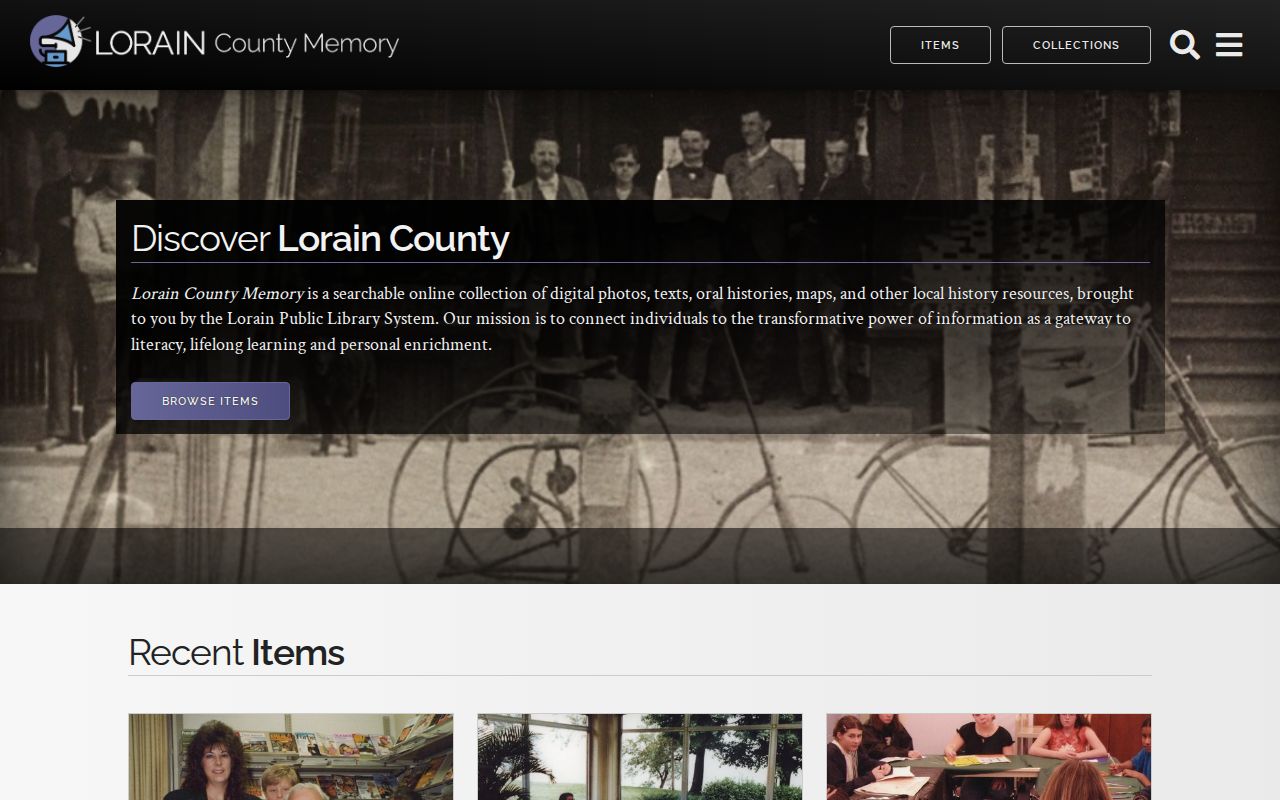
Pair an archive item with a dated directory, Recorder instrument, or parcel clue before using it to explain who lived here before.
Note: Record both the printed historic address and the modern parcel anchor, rather than silently replacing one name with the other.
Lorain County Directories and Census Pairing
LPLS holds most formerly published Lorain city directories as far back as 1903, while its holdings for other communities are incomplete. A directory can supply a name, address, and telephone clue for its own edition. It is a voluntary source, so it should be tested against nearby editions and other records. The historical collections themselves are described on the Lorain County city directories page.
For a household trail, combine directory years with newspapers and released census years. LPLS has Lorain Journal and Morning Journal microfilm beginning in 1922, Lorain Times-Herald from 1901 to 1932, and Lorain Daily News from 1904 to 1918. Its census microfilm reaches through 1920 for Lorain and selected nearby counties, with Lorain County for 1930. These sources can suggest a household at a period address, but they do not turn a deed party into a proven occupant.
- Copy the surname, address, spelling, and directory year exactly as printed.
- Check the nearest earlier and later directory editions for a move or continuity clue.
- Search a nearby newspaper date or obituary citation to add dated local context.
- Compare the period with an available census year, keeping the census date separate from the directory’s publication date.
- Return to the Auditor property number and Recorder legal description when an address or street label changes.
The library’s local-history research guidelines describe focused staff help for questions likely answered by its microfilm or Special Collection print material. Staff ask for a specific date or week and year for newspaper work; they do not build a family tree or search census databases on a requester’s behalf.
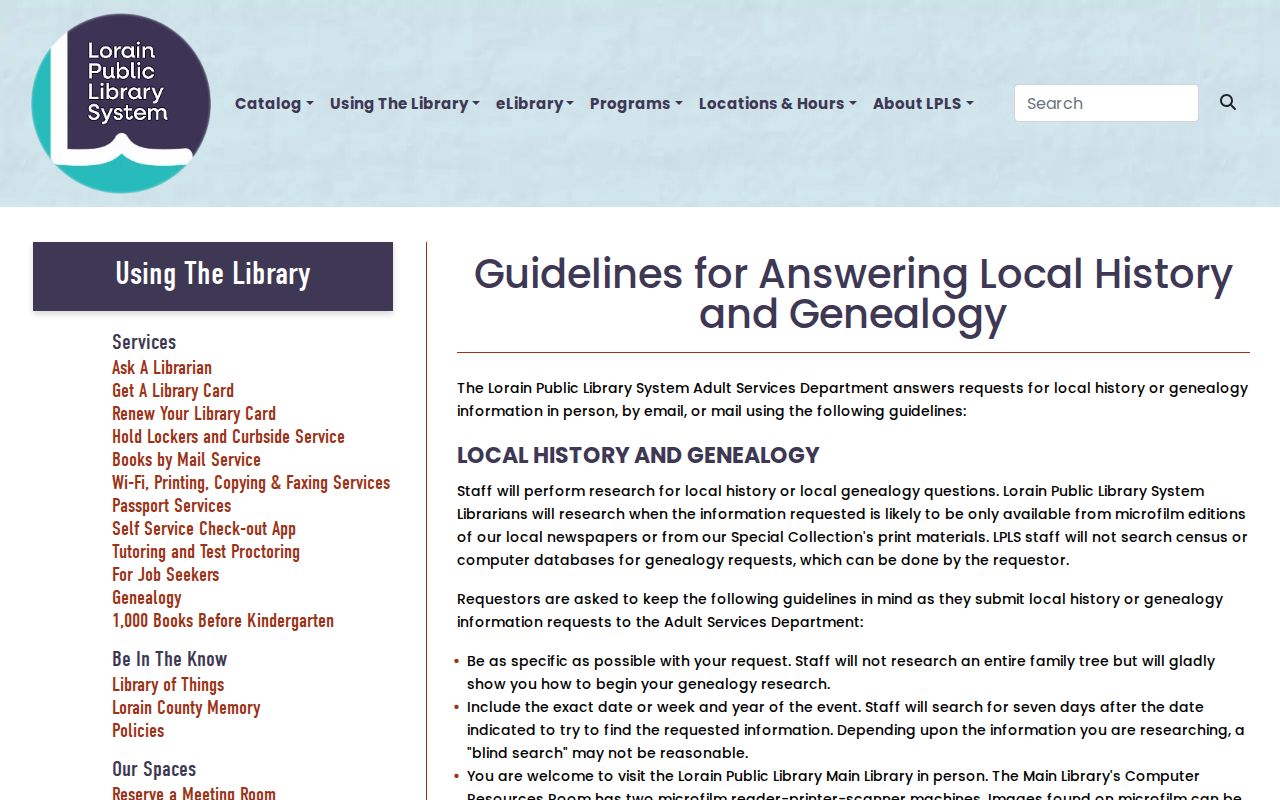
The library route is especially useful when an address trail reaches a printed directory or microfilm period that the online property tools do not resolve.
Lorain County Households After a Deed
A recorded owner was not always the person at the address. A deed records a property interest. A directory, census schedule, obituary, newspaper notice, or probate paper can provide a different kind of dated clue. Renters, extended family, and other household members may not appear in the deed chain at all. Keep the source and date beside each claim about past residents, especially where the records disagree.
Lawful use. Lorain County house-history research is for family history, estate and heir questions, and property curiosity. Do not use old address information to track, harass, threaten, or harm any living person.
County records that are not available through a portal may be requested from the responsible office under the Ohio Public Records Act, ORC §149.43, subject to redactions. A focused request names the address, approximate date range, record type, and whether inspection or copies are sought.
Lorain County Offline Address Records
When a prior-residents search reaches an offline gap, use the local channels in order. LPLS can point to its Special Collection, newspapers, cemetery material, yearbooks, and historical vital films. The Lorain County Historical Society’s Johnson Family Library is another route for local material that has not been digitized. It requires an appointment and offers on-site assisted research as well as remote assistance with published hourly terms and a request authorization process.
The Lorain County Historical Society library-research service is appropriate when a known volume, local-history file, or older directory run needs a staff-assisted check. Research fees cover time and do not guarantee that a record will be found. That is a useful safeguard when building a careful address history from incomplete sources.
Note: A missing online result should lead to the Recorder counter, library shelf, or Historical Society appointment before a past-residents trail is closed.
Lorain County Probate Record Endpoints
Probate and obituary material can narrow a final period in an address history. LPLS contributed obituary records to the Ohio Obituary Index and can help locate the underlying local paper when a citation is known. Probate files may identify an estate, heirs, marriage-related matter, or a certificate of transfer, but a named party in a filing does not by itself establish residence at a particular date.
The Lorain County Probate Court marriage-license page is one official local endpoint for a family-history lead. Probate-related online search coverage begins in 1990, while Probate Court records are available at the office from 1824. For an older matter, ask the court counter about the file rather than treating an online no-result as the end of the record.
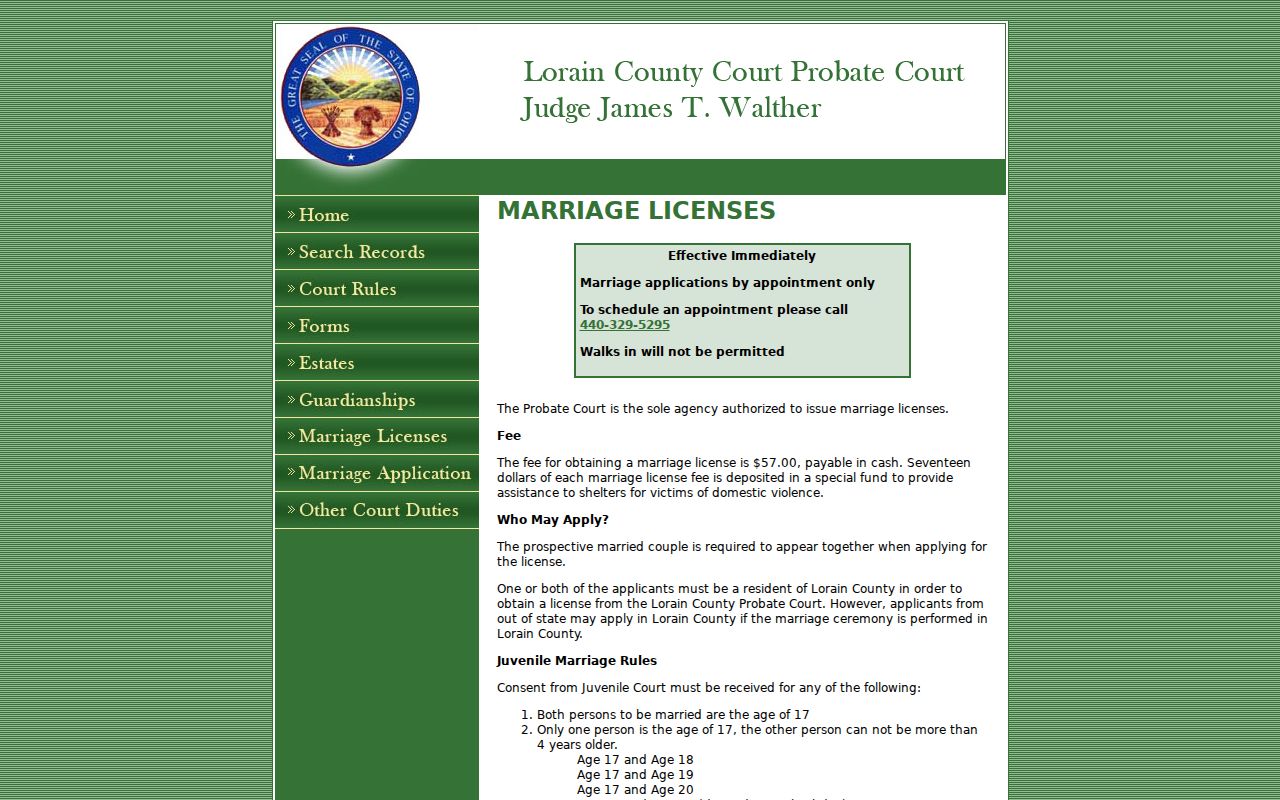
A probate or marriage record can establish a date-based family connection, then needs to be compared with the address sources from the same period.