
Lorain County Block Records by Source
Lorain County neighbor research works best as an immediate-parcel question. The Auditor and GIS tools establish the subject parcel and its surroundings. The Recorder then supplies recorded property-document parties for a selected parcel or named party. Voter information has a different, much narrower use. Historical institutions can provide dated neighborhood context. None of these sources is a complete household list, so a result should be described only for what that custodian and date can support.
| Source | What It Shows About a Block | Access |
|---|---|---|
| GIS and Auditor | Parcel pattern, property numbers, situs and tax context | County public portal |
| Recorder instruments | Recorded property-document parties for a parcel or name/date trail | Account portal or Recorder counter |
| Ohio Voter Search | One named person’s registration context where public | State individual lookup, not a block roster |
| Ohio DATA voter archive | Dated county registration snapshot subject to legal rules | State archive download |
| LPLS and LCHS | Historic address and neighborhood context | Library or appointment research |
| City records route | Address-specific project or administrative evidence when released | Department form or records request |
Start with the narrowest question: which public parcels immediately adjoin this parcel, and what current property facts are attached to them? That keeps a Lorain County neighbors search grounded in the parcel records instead of making unsupported claims about residents.
Note: A parcel boundary provides useful context, but it is not a survey or a legal decision about a property line.
Lorain County Parcel Lookup Begins in GIS
The Lorain County Auditor GIS & Tax Map provides the public entry point for a parcel, owner, or address search and links to the Parcel Viewer, GIS Portal, and GIS Open Data. Use the Auditor result to retain the property number and situs address. Then use the map to see only the immediately adjoining parcel numbers. The live GIS is JavaScript-rendered, and a complete layer or control inventory was not verified, so do not assume it has a buffer, household, or list feature.
The Auditor’s Name Search is an owner-oriented property route, not a neighbors directory. The page’s public search screen is the source of the image below.
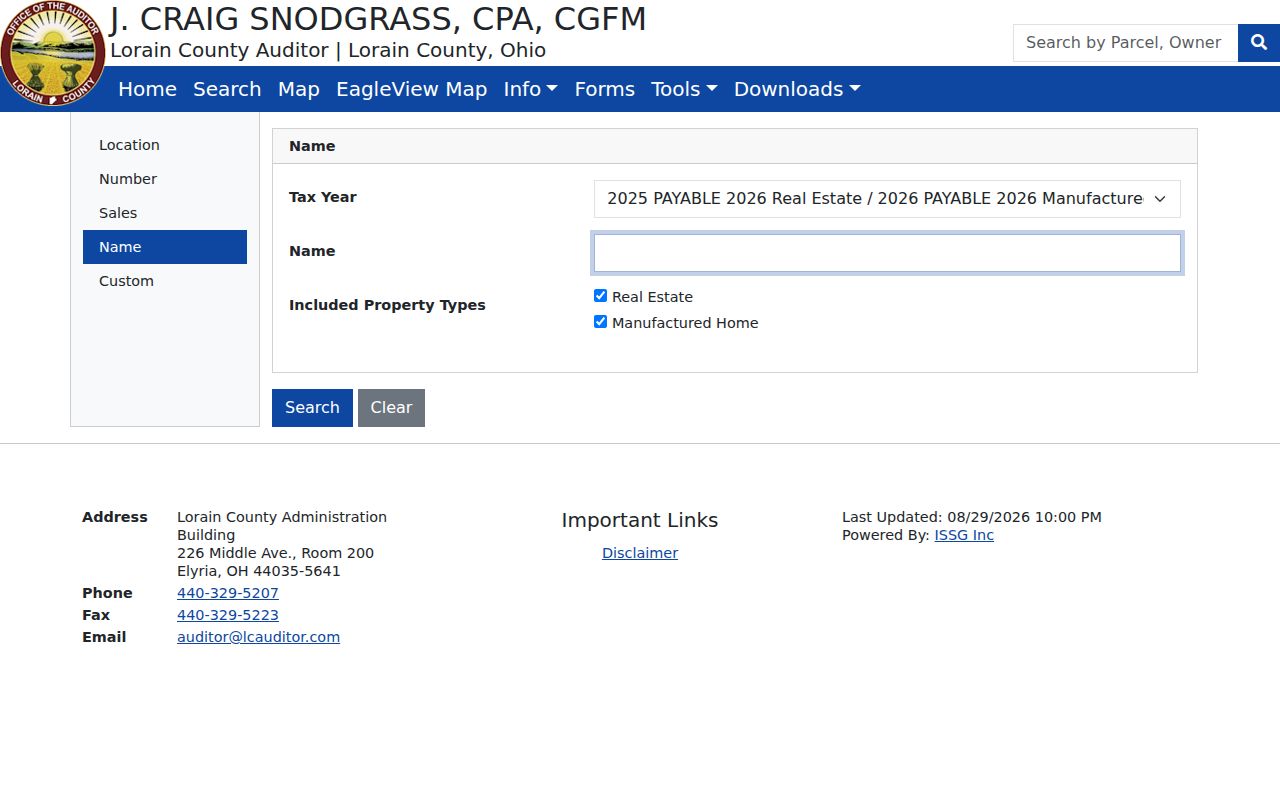
Use an Auditor result to return to a specific property number. The result supports a parcel question, not a conclusion about every person at the address.
For a current named street’s broader record trail, the Lorain County by-street directory follows a different, street-wide method. The block method stays with adjoining parcels.
Lorain County Block Records, One Parcel Each
The immediate-parcel workflow is intentionally short. It uses the map for visual context, the Auditor for an individual property record, and the Recorder for a recorded-document check. Do not stretch the process into a radius list or infer household membership. If an adjoining parcel has a different number, treat it as a separate research item and record the date of every result.
- Enter the subject address in the Auditor’s public address route and record its exact situs address and property number.
- Open the Parcel Viewer from the Auditor GIS page and note the property numbers of parcels that immediately touch the subject parcel.
- Run each adjoining property number separately in the Auditor to review its public property context and owner label.
- When a recorded-property question remains, search the relevant name, parcel clue, or date in Recorder DTS Public Access and inspect the actual instrument.
- Keep the resulting records separate. Stop if the question shifts from public parcels to who is living in a nearby home.
The Recorder’s public instructions say that its account-backed system supports name, parcel-number, and date searching, and that an Instrument image can be opened from a selected record. It is not a title opinion. Legal descriptions and party roles should be recorded as printed rather than replaced with a map-based assumption.
Lorain County Property Records Exclude Households
An Auditor owner-occupancy attribute is a tax-status clue, not a complete roster of a home’s occupants. The county describes its 2.5% owner-occupancy reduction as requiring ownership and occupancy as a principal domicile on January 1. That makes the attribute relevant to the tax record, but it does not identify renters, relatives, guests, delivery recipients, or every other person connected with the address.
The property search distinguishes a situs or location address from other record concepts. In older research, a legal description can be more reliable than a street name. For a neighbors question, the safest statement is that the public record associates a named property-interest or tax attribute with a particular parcel on the date checked.
Note: A name attached to a property record should be kept as a property-record fact, not expanded into a claim about an entire household.
Lorain County Voter Lookup Is Individual
Ohio Voter Search is a one-person confirmation screen. It requires first name, last name, and county, with a conditional street selector only when the form needs to narrow that personal search. It returns registration, precinct, and polling-place information for a match. It is not an address browser and cannot be used to make a block roster.
The separate Ohio DATA voter archive contains dated public registration snapshots under the state’s release rules. The archive’s filters include election, start date, end date, and county list. A custom selection is limited to seven days and requires first name, last name, and email for delivery. Its records are subject to statutory withholding, and protected voters must remain protected.
For registration corrections, protected-voter questions, precinct issues, or a specific public-record request, contact the Lorain County Board of Elections. The Board, not a map or private list, is the proper custodian for that question.
Lorain County Community Records Gaps
No authoritative county or city umbrella inventory of neighborhood associations, homeowners’ associations, public member lists, or block-watch rosters was independently verified. That gap matters. Do not invent an association name, a public contact, or a membership list. Historical community context can still be researched through named institutions, but it must stay distinct from a current-neighbors claim.
| Research need | Documented contact route | What the route can provide |
|---|---|---|
| Historic address or neighborhood clue | LPLS Special Collection, including local-history contact information | Directories, newspapers, maps, yearbooks, clippings, and local-history references |
| Offline local-history material | Lorain County Historical Society library research | Appointment-based research and a documented remote-research option |
| Government office contact | City of Lorain staff and department directory | Current public office contact, not a resident or association directory |
| Address-specific city record | Responsible department or a precise public-records request | Released administrative evidence for a stated address and period |
These routes can locate a source or office. They do not supply a verified membership list for Lorain County neighbors.
Lorain County Block Records in Historical Context
Historic place names can make a block look unfamiliar. Lorain County Memory identifies Franklin Street as today’s Fifth Street in an early twentieth-century item, and older material can use Charleston or Black River Township. Those labels are clues for a map, photograph, directory, plat, or legal-description check. They should not be silently converted into a modern address or used to assume that two parcels are the same.
Lorain County Memory’s collections browser offers city history, yearbooks, photographs, and civic-history material. It supports contextual research. Pair any item with a source carrying a date and address before treating it as evidence related to a past block.
Lorain County Official Records Compared
Official records and commercial neighbor tools answer different questions. An official record identifies its custodian, record date, field, and access boundary. A commercial category may combine varied sources, and its results can be stale, incomplete, or too broad. A composite result does not turn protected, utility, motor-vehicle, or private household data into a public record.
| Official parcel and records route | Commercial neighbor-tool category |
|---|---|
| Names the Auditor or Recorder as custodian and ties facts to a parcel or instrument | May combine records with different dates and unexplained sources |
| Shows the specific search boundary and the date checked | May obscure when an address or association changed |
| Preserves statutory redactions and custodian access limits | Cannot override protected or nonpublic information |
| Supports property curiosity, local history, and civic transparency | Needs careful independent verification against the custodian |
The practical choice is simple: use the Auditor and Recorder for the public parcel question, then contact the custodian when a record is incomplete or unclear.
Lorain County Block Records Have Privacy Limits
Public parcel records do not reveal everything about a block. Renters, household members, confidential voters, utility customers, and motor-vehicle personal information are not a lawful substitute layer for a neighbor search. Ohio Safe at Home participants have address confidentiality protections under ORC §§111.41–111.47, and confidential voter records are protected. A missing name must never be treated as a prompt to reconstruct a withheld address.
If an address-specific administrative record is needed, a clear request should identify the location, approximate date, record type, and whether inspection or copies are sought. The Lorain County 911 public-records form is limited to 911-related records and requires incident-identifying information. It is not a tool for finding neighbors.
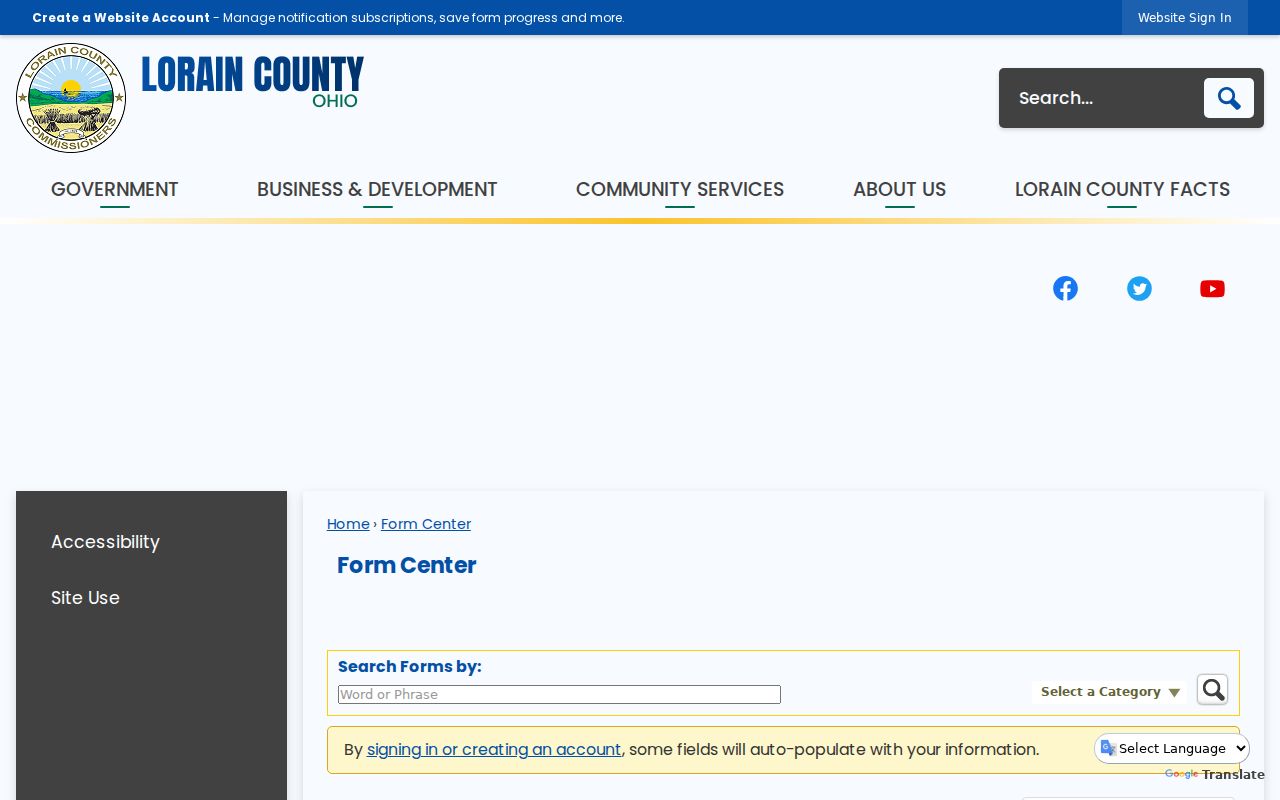
The form illustrates a focused, custodian-specific request path for a defined incident record, with redactions and access limits still applying.
Lawful use. Lorain County neighbors research is limited to personal property curiosity, local history, and civic transparency. Never use public records to watch, harass, threaten, or harm another person.